
How to Overcome Emotional Pain and Disconnection in Your Relationship
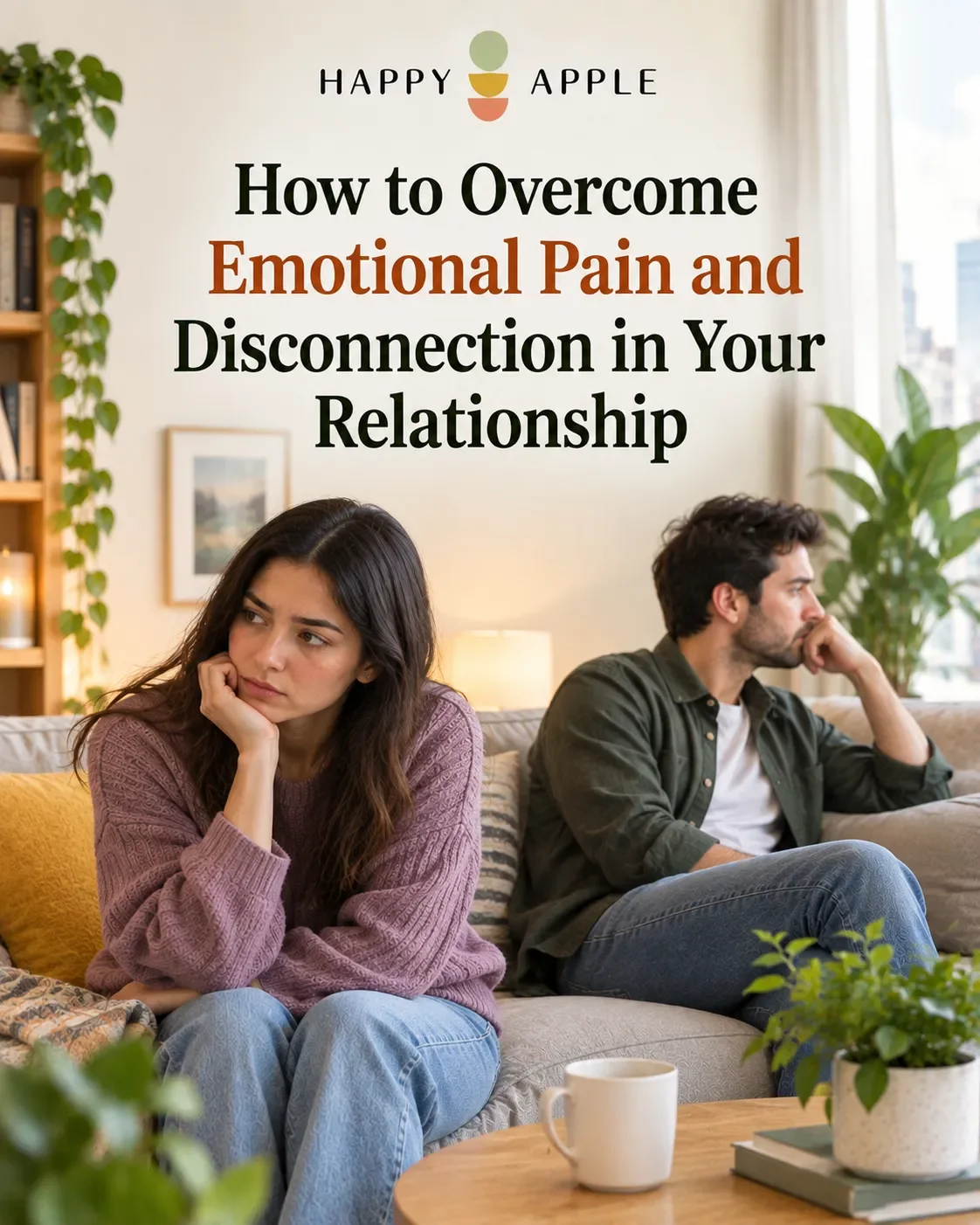
Emotional pain in a relationship does not show up overnight. It grows slowly, often quietly, through unspoken feelings, unresolved conflict, unmet needs, and patterns that become harder to break with time.
Many couples love one another deeply yet feel emotionally distant. They live together, share responsibilities, raise children, and plan their futures, but inside they feel a sense of loneliness, tension, or confusion about what changed and when things began to drift.
At Happy Apple NYC, we frequently hear couples across New York City say things like:
“Nothing is exactly wrong, but nothing feels right either.”
“We talk, but somehow we never really connect.”
“I miss feeling close to my partner.”
If this resonates with you, you are not alone. Emotional disconnection is one of the most common concerns couples bring to therapy, and the good news is that it is absolutely something you can heal. The journey begins with understanding what creates disconnection, why emotional pain lingers, and how partners can rebuild the closeness that once felt natural.
This guide explores each of these processes in depth while offering practical, research-backed ways to reconnect and rebuild emotional intimacy.
Understanding Emotional Pain in Relationships
Emotional pain is not always dramatic. Sometimes it feels like a heavy silence. Other times it shows up as irritability, withdrawal, or frustration over small things. It may come from conflict that was never resolved, but it can also develop even when there is no major disagreement at all.
Where Emotional Pain Often Begins
Emotional pain usually has roots in:
● Feeling unheard or misunderstood
● Repeated arguments that never fully resolve
● Unbalanced roles and responsibilities
● Emotional labor falling on one partner
● Different communication styles
● Individual stress spilling into the relationship
● Unexpressed resentment
● Changes in sexual or physical intimacy
● Feeling taken for granted
● A lack of emotional curiosity from one or both partners
Many couples do not recognize emotional pain until it disrupts connection, communication, or physical intimacy. When left unaddressed, partners may begin behaving in self-protective ways. These protective behaviors slowly become patterns, and the patterns slowly become the norm.
What Emotional Disconnection Actually Looks Like: Common Signs of Emotional Disconnection in a Relationship
Couples often ask, “Are we just busy, or are we emotionally disconnected?”
Below are the most common signs therapists see when emotional distance is taking hold.
Changes in Communication
Conversations become shorter or more transactional. You may talk about schedules, work, and household needs but not about feelings, dreams, or personal struggles.
Increased Misunderstandings
Small misunderstandings lead to frustration because emotional space makes partners interpret each other less generously.
Reduced Affection
Touch, compliments, and warmth decrease. You may still love each other, but the expression of love feels muted.
Loneliness Despite Being Together
One or both partners feel lonely even when physically together, which is one of the strongest emotional indicators of disconnection.
Heightened Sensitivity
Neutral actions may suddenly feel hurtful or disappointing because deeper needs are not being met.
Disconnection can happen in all long-term relationships. What matters is how you repair and reconnect.
Why Emotional Pain Persists
Emotional pain often lingers because couples respond in protective, self-soothing ways that unintentionally deepen distance.
Some common patterns include:
Avoidance
Avoiding difficult topics may reduce conflict in the moment but gradually builds tension and creates emotional distance. Learning structured, low-pressure ways to handle conflict in your relationship can make it easier to raise a hard topic before avoidance turns into distance.
Pursuer–Withdrawer Cycle
One partner seeks closeness or clarity while the other pulls back. The more one pushes, the more the other retreats, strengthening the cycle.
Overfunctioning and Underfunctioning
One partner takes on emotional responsibility for the relationship, while the other disengages. This pattern often develops silently and becomes difficult to interrupt.
Assumptions Instead of Curiosity
Partners assume they already know what the other feels, leading to a lack of emotional exploration.
None of these patterns reflect personal failure. They are protective strategies that once served a purpose. Therapy helps bring awareness to these patterns and shift them into healthier, more connected behaviors.
Rebuilding Connection: What Actually Works
Healing emotional distance requires intentional steps that rebuild trust, presence, and emotional engagement. Below are the evidence-based methods used at Happy Apple NYC to help couples reconnect.
Opening Up Emotionally in a Safe Way
Many partners want closeness but feel uneasy about initiating emotional conversations. You can start by focusing on small, consistent practices that create emotional safety.
Practice Non-Defensive Listening
Instead of preparing a response, try listening to understand. Reflect what you hear. Validate the feeling. Emotional safety begins when partners show each other that their feelings matter.
Use “Emotion First” Communication
Instead of saying what happened, say how it made you feel. The emotional part of the message invites closeness.
Share Your Inner World
Talk about your stress, hopes, worries, and desires, not just your schedules. Small emotional disclosures lead to deeper intimacy.
Rebuilding Trust Through Small Acts of Care
Trust is not rebuilt through grand gestures. It grows through small, consistent actions that show reliability and caring attention.
Examples include:
● Following through on commitments
● Checking in emotionally
● Making time for connection
● Apologizing clearly when you get it wrong
● Showing affection without being asked
● Demonstrating curiosity about your partner’s feelings
These small actions create stability. Stability creates safety. Safety creates intimacy. This kind of steady repair is often exactly how couples therapy helps save marriages that feel too far gone to fix.
Restoring Healthy Communication
Couples often communicate, but the communication may not serve connection.
You can rebuild healthy communication by:
Slowing the Conversation
Slower conversations reduce assumptions and emotional reactivity.
Using Differentiation Instead of Defensiveness
Differentiation means expressing your truth while staying open to your partner’s truth. This reduces conflict and increases mutual understanding.
Clarifying Needs
Instead of expressing what you dislike, express what you need. A need is actionable. A complaint is not.
Reigniting Emotional and Physical Intimacy
Emotional intimacy and physical intimacy are deeply connected. When emotional closeness returns, physical closeness often follows naturally.
Ways to support reconnection include:
● Spending quality time without distraction
● Touching in small, nonsexual ways
● Reintroducing date nights
● Sharing feelings before physical intimacy
● Discussing comfort levels openly
When both partners feel emotionally safe, intimacy becomes a natural expression rather than an obligation.
Understanding Your Relationship Patterns
Couples rarely stay disconnected because they do not care about each other. They stay disconnected because they do not understand the emotional patterns they are caught in.
Therapists help couples identify:
● Patterns created by past experiences
● Reactions rooted in childhood emotional wounds
● Unspoken expectations
● Differences in attachment styles
● How stress impacts each person’s capacity for connection
Once partners understand these patterns, the relationship becomes easier to navigate with compassion instead of frustration.
How Happy Apple NYC Helps Couples Heal Emotional Disconnection
At Happy Apple NYC, we take a deeply relational and emotionally attuned approach to couples therapy. We work with couples to uncover the emotional layers beneath the surface and rebuild connection from the inside out.
Our approach includes:
● Emotionally Focused Therapy
● Internal Family Systems principles
● Gottman-informed communication tools
● Mindfulness and somatic awareness
● Attachment-based understanding
● Conflict repair frameworks
● Deep insight into relational patterns
Therapy provides a space where both partners feel safe, heard, and supported. Together, we work on strengthening communication, rebuilding intimacy, and fostering a deeper emotional bond. Couples curious how these methods compare can read more about the Gottman Method vs. EFT approach to see which style fits their relationship.
Practical Tools Couples Can Start Using Today
Here are simple, research-backed practices that help couples begin reconnecting even before therapy starts.
Daily Check-In Ritual
Spend five minutes sharing one feeling, one need, and one appreciation.
Weekly Emotional Debrief
Choose a quiet moment to talk about one thing that felt good, one thing that felt challenging, and one thing you hope for in the coming week.
Connection Ritual
Engage in one small moment of physical affection or eye contact that is intentional, not rushed.
Repair Conversations
When conflict happens, circle back to one question:
“What was the emotion underneath what I was trying to say?”
These practices help couples shift from survival mode to connection mode.
Conclusion
Emotional pain and disconnection may feel overwhelming, but they are not permanent. Relationships go through phases, and emotional distance is often a sign that something deeper needs attention, not a sign that love is gone. When couples learn to slow down, understand each other’s emotional worlds, and communicate with compassion, connection naturally begins to grow again. Many of these same patterns show up across the common issues couples bring to therapy, so you are far from alone in facing them.
Healing is possible. Intimacy is rebuildable. Disconnection is reversible. You and your partner deserve the kind of relationship where both of you feel seen, valued, supported, and emotionally safe. And with the right guidance and tools, that relationship is absolutely within reach.
If your relationship is struggling with distance or emotional pain, therapy at Happy Apple NYC can provide a supportive space for couples anywhere in New York to rebuild the closeness you miss and the connection you both deserve.
Frequently Asked Questions
What are the signs of emotional disconnection in a relationship?
Common signs include shorter or more transactional conversations, reduced affection, feeling lonely even when together, heightened sensitivity to small things, and a general sense that something is “off” even without a specific conflict. These signs tend to build gradually rather than appear all at once.
How do you reconnect with your partner emotionally?
Reconnection usually starts small: slowing down conversations, practicing non-defensive listening, sharing feelings instead of just logistics, and rebuilding trust through consistent, small acts of care. For many couples, working with a couples therapist helps this process move faster and feel safer.
Is emotional disconnection a sign a relationship is ending?
Not necessarily. Emotional distance is common in long-term relationships and often signals that something needs attention rather than that the relationship is over. With awareness and effort, most couples are able to rebuild closeness.