
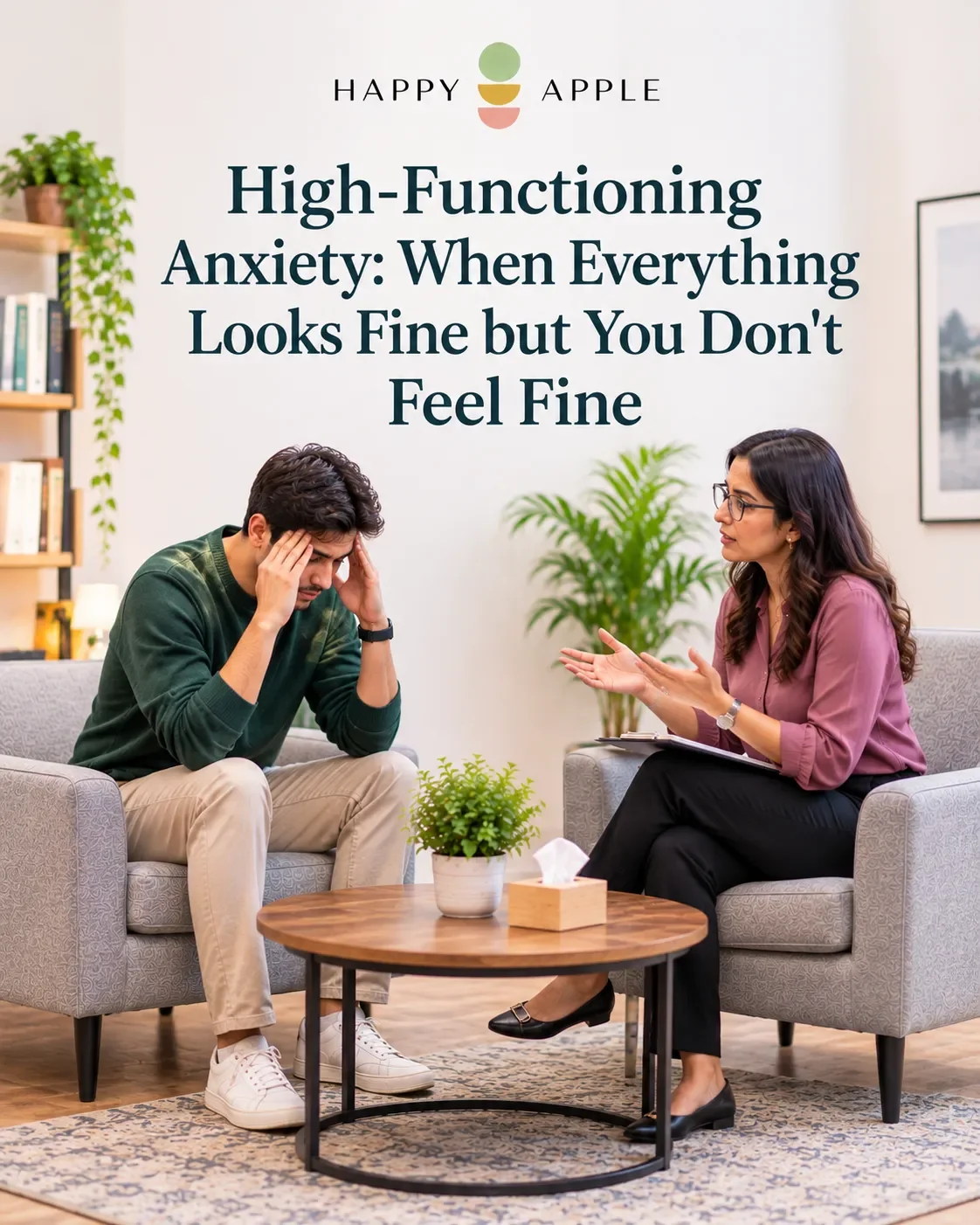
You meet deadlines, respond to messages, show up for work, and remember details others forget. From the outside, your life appears organised and under control. People may describe you as dependable, ambitious, or someone who has everything figured out.
Inside, however, your mind rarely slows down. You replay conversations, anticipate problems, and feel uneasy even when nothing urgent needs attention. Completing one task brings temporary relief before worry about the next begins. Even when others praise your efforts, you may feel as though you are falling behind.
This experience is often described as high-functioning anxiety. Although it is not a formal mental health diagnosis, the term describes how someone can appear successful while experiencing persistent anxiety that affects their quality of life. Recognising this pattern can help you understand your feelings and consider whether professional support may help.
What Is High-Functioning Anxiety?
High-functioning anxiety describes a pattern in which someone experiences significant worry, self-doubt, or fear while continuing to manage everyday responsibilities. They may maintain a successful career, care for their family, and appear socially confident, even when their internal experience feels exhausting.
The term is commonly used in everyday conversations about mental health, rather than as a clinical diagnosis. A mental health professional can assess whether the symptoms are associated with generalised anxiety disorder, social anxiety, another condition, or stress that needs further attention. UCLA Health also highlights how high achievement can coexist with substantial anxiety and the effort required to appear as though everything comes naturally.
What makes this experience difficult to recognise is that productivity can conceal distress. You may not miss deadlines or cancel plans. Instead, you might spend twice as long preparing, struggle to switch off after work, or push yourself through situations that leave you emotionally drained.
Because you are still functioning, you may tell yourself that nothing is wrong. Yet functioning well and feeling well are not the same thing.
6 Signs of High-Functioning Anxiety
High-functioning anxiety does not look identical for everyone. Some people experience constant mental activity, while others notice physical tension, perfectionism, or a persistent need to stay busy.
1. You Overthink Even Small Decisions
You may spend an unreasonable amount of time deciding how to word an email, whether someone sounded annoyed, or whether you made the right choice during a conversation.
After making a decision, you revisit it repeatedly, searching for evidence that you made a mistake. Even ordinary interactions can become mentally exhausting because you keep analysing what could have gone differently.
2. You Feel Driven to Get Everything Right
Being organised and conscientious can be valuable qualities. The difficulty begins when mistakes feel unacceptable.
You might check your work repeatedly, spend hours refining something that was already good enough, or feel deeply unsettled by constructive feedback. Instead of seeing a mistake as something you can correct, you may interpret it as evidence that you are not capable enough.
Perfectionism can then become a way of managing fear. If you prepare enough, check enough, or work hard enough, perhaps nothing will go wrong. Unfortunately, the relief rarely lasts.
3. You Find It Difficult to Rest
Free time may feel uncomfortable because there is always something you could be doing. You might create new tasks when your workload is already manageable or feel guilty about taking a break.
Even when you sit down to relax, your attention remains on unfinished work, upcoming responsibilities, or possible problems. Rest begins to feel like something you must earn rather than a normal part of life. Over time, this pattern can contribute to work stress and career burnout.
4. You Say Yes When You Want to Say No
You may accept additional work, agree to social plans, or take responsibility for other people's problems because you are worried about disappointing them.
You might fear being seen as unreliable, selfish, or difficult if you express a preference or set a boundary. Although people appreciate your willingness to help, you may gradually become resentful or overwhelmed.
5. You Expect Something to Go Wrong
Even during positive periods, you may struggle to enjoy what is happening. A successful presentation becomes a reason to worry about the next one. A good performance review leads to concerns about maintaining expectations.
Your mind may treat uncertainty as a problem that must be solved immediately. Instead of experiencing relief when things go well, you begin preparing for the next possible difficulty.
6. Your Body Feels Tense Even When You Look Calm
Anxiety can appear physically as well as emotionally. You may experience headaches, muscle tension, stomach discomfort, restlessness, a racing heartbeat, or difficulty sleeping.
You might notice these symptoms most clearly at night, when there are fewer distractions. The day may have looked productive, but your body still feels as though it has been under pressure.
Persistent or new physical symptoms should not automatically be attributed to anxiety. A healthcare professional can help assess whether another medical explanation needs to be considered.
Why Can High-Functioning Anxiety Go Unnoticed?
One reason high-functioning anxiety can remain unrecognised is that many of the behaviours associated with it are socially rewarded.
Being prepared, meeting deadlines, anticipating problems, and helping others are often viewed as signs of responsibility. In workplaces and families where being dependable is highly valued, there may be little encouragement to question the pressure behind these behaviours.
Cultural expectations can also influence how people understand emotional distress. You may have grown up believing that hard work requires sacrifice, that worrying shows you care, or that asking for help means you cannot manage your responsibilities. These beliefs can make persistent anxiety seem like a normal part of being an adult.
Another factor is self-normalisation. If you have spent years feeling anxious, you may assume that everyone experiences the same level of internal pressure. You might not recognise that constantly anticipating problems or feeling guilty about ordinary decisions can be signs of anxiety worth exploring.
There is also a common misconception that anxiety must interfere with employment, relationships, or everyday responsibilities before it deserves attention. This belief can lead people to compare their experiences with those of others and dismiss their own concerns.
However, mental health difficulties do not have to be visible or severe enough to disrupt your daily routine before they warrant attention. Understanding the expectations and assumptions that shape your response to anxiety can be an important first step towards recognising it.
How High-Functioning Anxiety Becomes a Repeating Cycle
High-functioning anxiety can become self-reinforcing because the ways you respond to worry may provide temporary relief without addressing the underlying fear.
Consider what happens when you worry that a friend or colleague is upset with you. You might send a message asking whether everything is okay. When they reassure you, your anxiety decreases. However, the next time their response is delayed or their tone seems different, the same uncertainty returns.
Over time, you may begin relying on reassurance to feel comfortable in situations where you cannot know exactly what another person is thinking.
Avoidance can create a similar pattern. Imagine you are invited to speak at an event but feel anxious about being judged. You decline the invitation, and your immediate discomfort decreases. However, you never get the opportunity to discover whether you could have managed the situation successfully.
The temporary relief makes avoidance more appealing the next time a similar situation arises.
These responses are understandable attempts to protect yourself from distress. However, they can gradually strengthen the belief that uncertainty, criticism, or uncomfortable emotions are things you cannot manage.
Recognising this cycle can help you understand why some coping strategies provide immediate comfort but make anxiety harder to manage over time.
How Therapy Can Help With High-Functioning Anxiety
Therapy can help you examine what lies beneath constant productivity, perfectionism, overthinking, and the need to keep everything under control. The goal is not to take away your ambition or make you less responsible. It is to help you pursue what matters without relying on persistent fear to keep you going.
At Happy Apple NYC, individual therapy can provide a space to explore these patterns and develop more sustainable ways of managing anxiety. If you are new to therapy, here is what to expect from your first few anxiety therapy sessions.
Cognitive Behavioral Therapy (CBT)
CBT helps you identify connections between thoughts, emotions, and behaviours. You might explore beliefs such as "If I make a mistake, people will lose respect for me" or "If I stop worrying, I will overlook something important."
Your therapist can help you evaluate these beliefs, recognise thinking patterns that intensify anxiety, and practise alternative responses. Treatment may also involve gradually reducing excessive checking, overpreparation, or reassurance-seeking when these behaviours are maintaining your anxiety.
Acceptance and Commitment Therapy (ACT)
ACT focuses on changing how you respond to uncomfortable thoughts and feelings. Rather than trying to eliminate every anxious thought, you learn to notice it without automatically allowing it to determine your actions.
For example, you may still feel nervous about setting a boundary at work. Therapy can help you consider what matters to you and communicate your limits even when some discomfort remains.
Mindfulness and Emotional Regulation
Mindfulness strategies can help you notice when your attention has become caught in future worries or self-criticism. Emotional regulation skills can help you respond to tension without immediately turning to more work, checking, or avoidance.
These approaches can complement other treatment methods, depending on your symptoms and goals.
Your therapist can discuss which approaches are suitable for you and how progress might be assessed. For a realistic sense of timing, see how long anxiety therapy takes to work. Therapy does not require you to abandon your strengths. It helps you develop ways to use those strengths without exhausting yourself.
Practical Ways to Manage High-Functioning Anxiety
Alongside professional support, a few everyday changes can help you develop a healthier relationship with responsibilities, uncertainty, and personal expectations.
Create realistic expectations for yourself. Before starting a task, decide what a satisfactory outcome looks like. This can help prevent ordinary responsibilities from becoming unnecessarily demanding.
Build short breaks into your day. Schedule time away from work, screens, and other responsibilities. Consistent breaks can make it easier to recognise when you need rest.
Use grounding techniques. When you notice your mind becoming overwhelmed, focus on your breathing or identify what you can see, hear, and feel around you. This can help bring your attention back to the present.
Maintain a consistent routine. Regular sleep, physical activity, and meals can support general wellbeing and help you manage everyday stress.
Make space for enjoyable activities. Spend time on hobbies, relationships, or interests that are not connected to achievement or productivity.
Write down recurring worries. Putting concerns on paper can help you distinguish between problems that require action and situations involving uncertainty that you cannot fully control.
These strategies are not a substitute for treatment when anxiety is persistent or significantly affecting your life. They can, however, provide practical ways to support your wellbeing alongside other forms of care.
When Does High-Functioning Anxiety Require Professional Help?
Consider seeking a professional assessment if anxiety becomes persistent, difficult to manage, or begins affecting your quality of life.
Some signs that additional support may be appropriate include:
Worry that feels excessive or difficult to control on most days.
Regular sleep disruption because of anxious thoughts.
Persistent physical symptoms such as muscle tension, restlessness, or stomach discomfort.
Difficulty concentrating or making decisions because of worry.
Avoiding important personal or professional opportunities because of anxiety.
Increasing conflict or emotional difficulties in close relationships.
Losing interest in activities you previously enjoyed.
Feeling that anxiety is taking up an increasing amount of your time and attention.
You should also consider professional support if your usual coping strategies no longer feel sufficient or if anxiety is accompanied by symptoms of depression.
A therapist or other qualified mental health professional can assess your symptoms, explore possible contributing factors, and discuss appropriate treatment options. CBT is a well-established psychotherapy for generalised anxiety disorder, while other therapeutic approaches or medication may be considered depending on individual needs and clinical assessment.
You do not need to wait for a crisis or a major disruption to your daily life before seeking an evaluation. If you are unsure whether you are ready to start individual therapy, a few clear signs can help you decide.
Finding Support at Happy Apple NYC
At Happy Apple NYC, individual therapy offers an opportunity to understand the anxiety behind the pressure to perform, anticipate every problem, or meet impossibly high expectations.
Treatment can focus on your particular concerns, whether these involve work stress, perfectionism, relationships, persistent worry, or difficulty switching off. Depending on your needs and the clinician's expertise, therapy may draw on CBT, ACT, mindfulness, and other therapeutic approaches.
Happy Apple NYC offers in-person sessions at its Manhattan office near Columbus Circle and online therapy, subject to location and availability. A complimentary 10-minute consultation can help you discuss your concerns and explore whether the practice may be a suitable fit.
Getting Help for High-Functioning Anxiety Without Giving Up Your Ambition
High-functioning anxiety can be difficult to recognise because it often exists alongside achievement, reliability, and outward confidence. You may continue meeting expectations while privately struggling to rest, feel secure, or enjoy what you have worked hard to achieve.
You do not have to wait until your performance suffers before taking your well-being seriously. If anxiety is making everyday life feel like a constant test, therapy can help you understand the patterns behind that pressure and develop a more sustainable way forward.
You can remain ambitious, dependable, and capable without having to live in a state of constant worry.
Frequently Asked Questions
Is high-functioning anxiety a real diagnosis?
High-functioning anxiety is not a formal clinical diagnosis. It is an informal term describing people who manage daily responsibilities while experiencing persistent worry, self-doubt, or internal distress.
What are the common signs of high-functioning anxiety?
Common signs include overthinking, perfectionism, difficulty relaxing, fear of disappointing others, excessive preparation, reassurance-seeking, and trouble switching off from work or responsibilities.
Can you have high-functioning anxiety without anyone noticing?
Yes. You may continue meeting deadlines, maintaining relationships, and appearing confident while privately struggling with constant worry. Outward success does not necessarily reflect your emotional well-being.
How is high-functioning anxiety treated?
Treatment depends on your symptoms and circumstances. CBT, ACT, mindfulness-based strategies, and other therapeutic approaches may help address persistent worry, perfectionism, avoidance, and unhelpful coping patterns.
When should I seek therapy for high-functioning anxiety?
Consider therapy when anxiety affects your sleep, relationships, concentration, or ability to enjoy life, even if you continue functioning well at work or home.
Can therapy help without changing my ambition or personality?
Yes. Therapy can help you manage anxiety while retaining your ambition and sense of responsibility. The goal is to reduce the distress and rigid patterns that make everyday life exhausting, not to change your personality.
